
Table of Contents
Skillion roofs are m
ore popular than ever in Australia. This is because their functionality and edgy design attract so many suburban homeowners.
This blog discusses this rising design phenomenon and if you should get one.
What is a Skillion Roof?
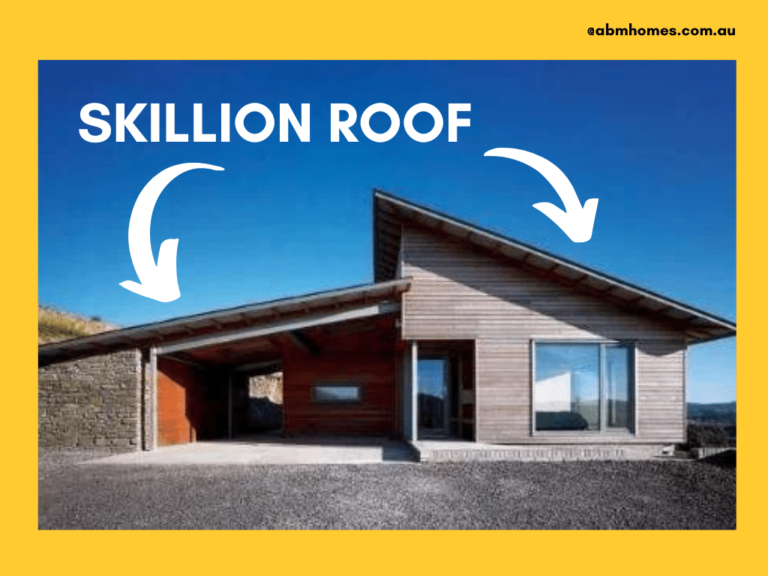
Skillion roofs are also called shed roofs or mono-pitched roofs. They differ from a standard roof: an average roof has two or more sloping sides.
These sides meet at an angle in the middle of the roof. Therefore, they peak at the center point of the roof/building.
On the other hand, a skillion roof has just one significant slope instead of two, and that slope can range from a very shallow, near-flat pitch to a steep, dramatic angle — the pitch is a design choice, not a fixed feature of the style.
In relative terms, a skillion roof sits between a flat roof and a gable roof: it takes the flat roof’s minimalism and adds enough pitch to shed water effectively, without the peaked structure of a gable.
Skillion Roof Construction
Building a skillion roof centres on getting the slope and support structure right — here’s how it comes together.
Constructing a skillion roof involves using a rafter support system (which could be either timber or steel) . Rafters are the long beams that provide the main support for the roof. They play a crucial role in the overall stability and integrity of the structure. The flat outer roofing material is placed directly on these rafters, ensuring a sturdy and reliable roof.
The simplicity of the skillion roof design, which consists of only a single sloping surface, makes it relatively easy to design and construct. This straightforward approach requires fewer materials and less labor compared to more complex roof designs, making it a cost-effective choice for many homeowners.
Moreover, the single slope of a skillion roof allows for excellent water drainage, which is particularly beneficial during Canberra’s rainy seasons. This design reduces the risk of water pooling and leaks, contributing to the longevity and durability of your roof. Additionally, skillion roofs can accommodate larger windows on the higher wall, allowing natural light to flood into your home and create a bright, airy living space. The high ceilings typically associated with skillion roofs also enhance ventilation, helping to keep your home cooler during Canberra’s hot summers.
What are skillion roofs made of?
Since they were traditionally made for extension buildings and tool sheds, skillion roofs are made to be more waterproof.
Keeping this in mind, most skillion roofs use streamlined materials such as metal sheeting with a rubber membrane underlay, which handles a single continuous slope well and keeps waterproofing costs down.
Tiles are an option too, but they generally cost more to install and waterproof properly on a skillion’s lower-pitch sections, which is why metal remains the more common and more affordable choice.
Skillion Roofs can be installed for a new build as well as a reconstruction project. Check out our Homebuyers Guide to Knockdown and Rebuild.
Types of Skillion roofs
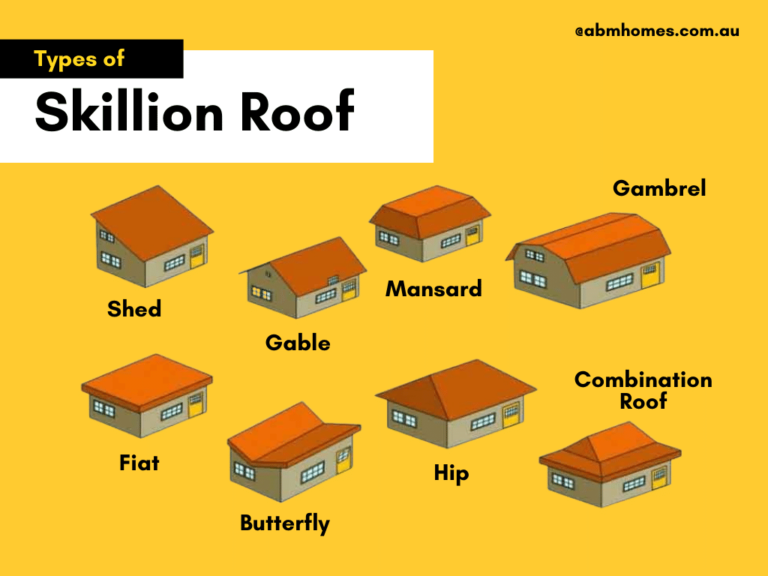
Butterfly skillion roof
These roofs get their name from their shape, which appears to have two wings, looking remarkably like a butterfly’s wings.
Two roof sections are pointed towards the center, helping collect rainwater making them very suitable for rainwater harvesting.
If positioned correctly, they offer a great surface area, making the design of your building even more environmentally friendly.
Oval-shaped or Gambrel skillion roof
This variant softens the roof’s sharp, angular lines into a gentle curve, giving it a look that’s more organic than industrial. Curved skillion roofs improve wind resistance compared to a standard flat-pitched skillion — a common weak point for this roof style — and offer more usable indoor ceiling space. The trade-off is cost: the specialised materials and construction needed for a curved profile make it a pricier option, which is why it’s less common on standard residential builds.
Split skillion roof
It combines traditional gabled roofing and skillion roofing for the same home. One section is generally kept higher than the other.
In terms of steepness, this type of roof can slope in opposite and similar directions.
Multiple skillion sections
This is the most cost-effective option for building a mono-pitched roof. Instead of one single skillion roof, there are several smaller skillion roofs.
In addition, it is easier to make each individual section can be built and maintained one at a time.
Want to see these variations in action? Browse our skillion roof design inspiration gallery for real examples skillion roofs on Australian homes.
Reasons to install a skillion roof
The following reasons are why you should choose a skillion roof:
- Minimal maintenance compared to more expensive roof types like hip roofs.
- Cheap to install, as well as fast.
- No drainage issues as drainage is quick.
- Easy to put solar panels on a skillion roofs.
- Aesthetically pleasing, minimalist.
- Eye-catching due to angular effect.
- They are very convenient to install skylights, which save energy and look terrific.
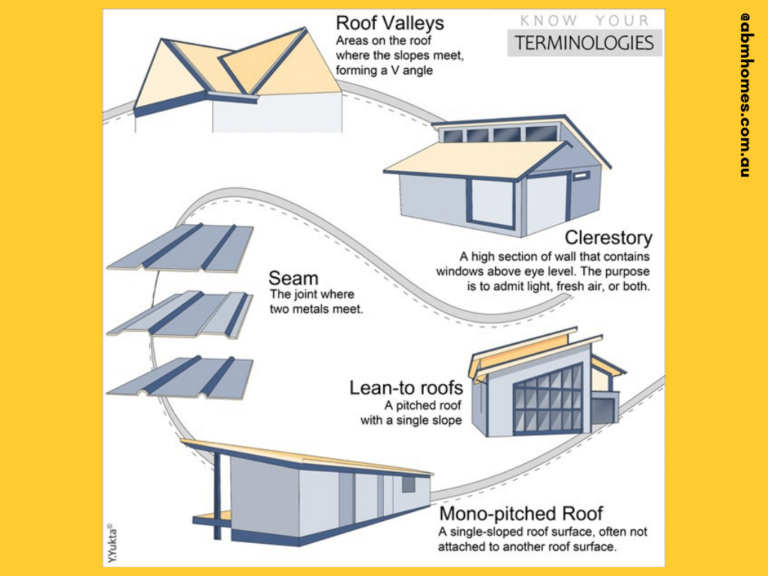
- You have the option to get privacy from one side of the house, using clerestory windows.
- Longer lifespan and more weather resistant.
- Better insulation if built with suitable materials.
When is the skillion roof not the answer?
- It’s not very ideal if you want more space in your house. That is because you can’t have attic space like a standard gabled roof.
- So even though you can get a high ceiling on one side, there is less space on the other.
- More damage from winds: If fast winds or hurricanes come, there can be significant damage to this type of roof.
- Ensure this kind of roof is well-made with the best materials and techniques. If you live in a high-wind area, it may not be the best option.
- A skillion roof can result in a low ceiling height if made too steep.
Skillion Roofs for Extensions and Granny Flats
Skillion roofs are a popular choice for single-storey extensions, granny flats, and alfresco additions — not just full home builds. Their simple single-slope structure is easier to tie into an existing roofline, needs fewer materials than a matching gable extension, and the steeper wall it creates is ideal for fitting in extra windows or skylights without a major structural overhaul.
If you’re extending a secondary structure rather than building new, a skillion roof is often the fastest and most cost-effective option available.
Get your skillion roof with ABM Homes
At ABM Homes, we specialize in building energy-efficient homes. That is why we offer the skillion roof as a part of our custom home building solutions.
Our engineers have years of experience designing and constructing skillion roofs for the main home structure and extension buildings.